James Thinks
writing is a kind of thinking
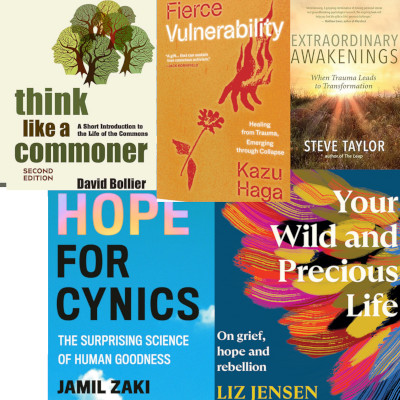
For anyone curious about what I'm reading and interested in lately, here are a few books I've read and what I thought.
Hope For Cynics - Jamil Zaki
I've a long-held intuition that people are typically good and want to be nice, but that some aspects of culture get in the way of that. Hope For Cynics looks into these questions through a scientific lens, challenging some popular beliefs such as the idea that being cynical is wise or savvy. On the contrary, this book shows that those who are cynical and expect the worst often miss out on good interactions and relationships.
What makes this more interesting is the way the author engages with the research, given his own bias towards being cynical. Taking inspiration from a late friend and fellow researcher who naturally took a more hopeful, optimistic view of the world and became a great humanitarian, Jamil Zaki convinces the reader as he convinces himself. Early in the book, he draws a clear distinction between cynicism and skepticism. The former assumes everyone to be selfish and unfriendly, the latter engages with strangers and measures their reaction against expectations. Zaki is a professor of psychology and there's research referenced throughout the book, along with many pages of references. However, it's the human stories that accompany this research that make the book so engaging. They reveal the real negative effects of cynicism and the surprising examples of how good people can be even when they think no one is watching.
This wasn't a challenging book for me, but rather one which confirmed what I already believe. I see cynicism as part of the problem of modernity that keeps people divided and suspicious when we desperately need connection and compassion. Everyone should read this.
Extraordinary Awakenings - Steven Taylor
Psychologist and researcher Steven Taylor carefully documents cases where people have not only recovered from extreme trauma, but changed dramatically for the better. Through bereavements, addictions and near death experiences this book explains how a fortunate few percent of people gain peace of mind, compassion and feelings of connection to the wider world. The author distinguishes this effect from post-traumatic growth by how rare and dramatic it is in comparison. Maybe 2% of people experiencing extreme trauma undergo the kind of transformation that is the focus of this book, compared with 40-60% with post-traumatic growth.
Many of the accounts border on the supernatural, where people describe not only effects of light, but presences or figures which they interpret in different ways. Taylor sensibly doesn't insist on prescribing any interpretation to this beyond suggesting that there is still a lot we don't know about human consciousness. He takes an approach of exploring it with humility and curiosity. That said, the book isn't limited to a series of mysterious tales. The common threads are drawn together and some big picture ideas are outlined. Broadly that this awakening effect is a positive thing and something everyone should work towards more slowly, without seeking trauma.
Fierce Vulnerability - Kazu Haga
This was recommended to me by an activist friend with a shared interest in nonviolence. Author Kazu Haga has a history of nonviolent activism and many of the situations and dilemmas he describes will be familiar to activists. However, the book is about much more than this. A central theme is trauma, how we all carry trauma, whether we're conscious of it or not and that it affects our relationships and culture. It's about healing in the broadest senses. Haga's argument, that I find very plausible, is that we cannot properly heal the world without also healing ourselves and vice versa. This chimes with the ideas of social prescribing - how traumatised people benefit from doing voluntary work. In order to do that work well, they will need to address their own trauma.
Haga makes clear the power of vulnerability by example. One that really stuck with me was that vulnerability is required for healing. When a person has surgery they are incredibly vulnerable, letting someone cut into them, often when they are unconscious. Yet this can be necessary for healing.
"If we don't transform our pain, we transmit it." - Father Richard Rohr
Another important insight that caught my attention is Haga's radical inclusivity. He takes inclusive activism to its logical conclusion and insists that there is no "them" and "us", only "us". I'm one of many who are often keen to identify a villain in the narrative, yet it may be more useful to see everyone as different kinds of victims and perpetrators.
There is much hard-won wisdom in this book. Haga has not had an easy life and openly discusses his own traumatic history and the ways he has and continues to work through it. This is an ideal book for anyone feeling frustrated or lost in their campaigns for a better world.
Think Like A Commoner - Dave Bollier
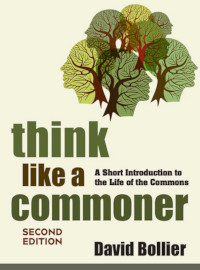
The subtitle "A short introduction to the life of the commons" is pleasingly-accurate.
This readable book gives some history - including Elinor Ostrom's research refuting the oft-repeated but misguided "tragedy of the commons", some theory - about how healthy commons function and some modern examples of the commons - from transition towns to Wikipedia. Most notable for me was learning that commons refers not simply to a shared resource, but to the community, their protocols, their values and practices in managing and creating it. Without these, a commons is not a commons.
This is very much a hopeful, progressive book always with an eye on how commons can be used to improve lives, strengthen community and protect the human and non-human world in a perilous and uncertain future. It is closer to a textbook than a novel, but no less readable for that. I appreciated the way it included brief summaries of the most important points at the end of the book as well as links to further resources.
Your Wild And Precious Life - Liz Jensen
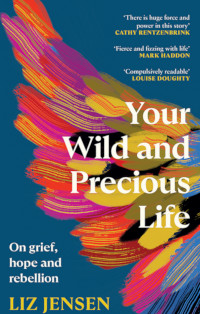
This is Liz Jensen's personal account of the sudden loss of her son - an environmental activist in his mid-twenties. It is also a beautiful eulogy to him, the kind that inspires others to follow his examples of courage and empathy.
Part of the reason I chose this book was an attempt to gain some understanding of what people experiencing grief go through. Grief is a near-universal human experience - I will have to go through it at some point. I've also had several friends and acquaintances suffer bereavement in the last few years and want to have some idea how to respond with empathy and compassion. I was also drawn to Liz Jensen's writing as she's someone who cares deeply about the rest of the living world and engages with a wider grief about its destruction. This background loss is certainly something I already feel and need to engage with further.
Jensen is a wonderful writer and describes the feelings she went through with heart-wrenching clarity. The first half of the book is often upsetting. I viscerally felt the family's overwhelming shock and trauma and found myself crying at times. Gradually, as the pages turn, some of the raw emotion turns to peace, some incomprehension becomes wisdom, some senselessness is replaced by meaning.
Her account include many mysterious and beautiful experiences of her lost son in the form of unexpected encounters with birds and other animals sharing his hair colour or other features. Although these moments are deeply meaningful to her, she remains agnostic about whether they are the products of a desperate grieving mind or a numinous visitation. These questions would've bothered me in years gone past, but this book alongside Awakenings reviewed above have allowed me to feel more comfortable leaving such mysteries unanswered. What matters is whether they are helpful to those who experience them and it certainly seems that in this case, they are.


James Bradbury
I write about whatever is on my mind. I do so mostly to help me think more clearly. If other people find it interesting that's good too. :-)
I see cynicism as part of the problem of modernity that keeps people divided and suspicious when we desperately need connection and compassion
If we don't transform our pain, we transmit it
Grief is a near-universal human experience - I will have to go through it at some point